Riad Dar Saidi
A 7-room family-run riad near Bab El Had with Rabat's largest Booking.com review count and a 9.0/10 score.
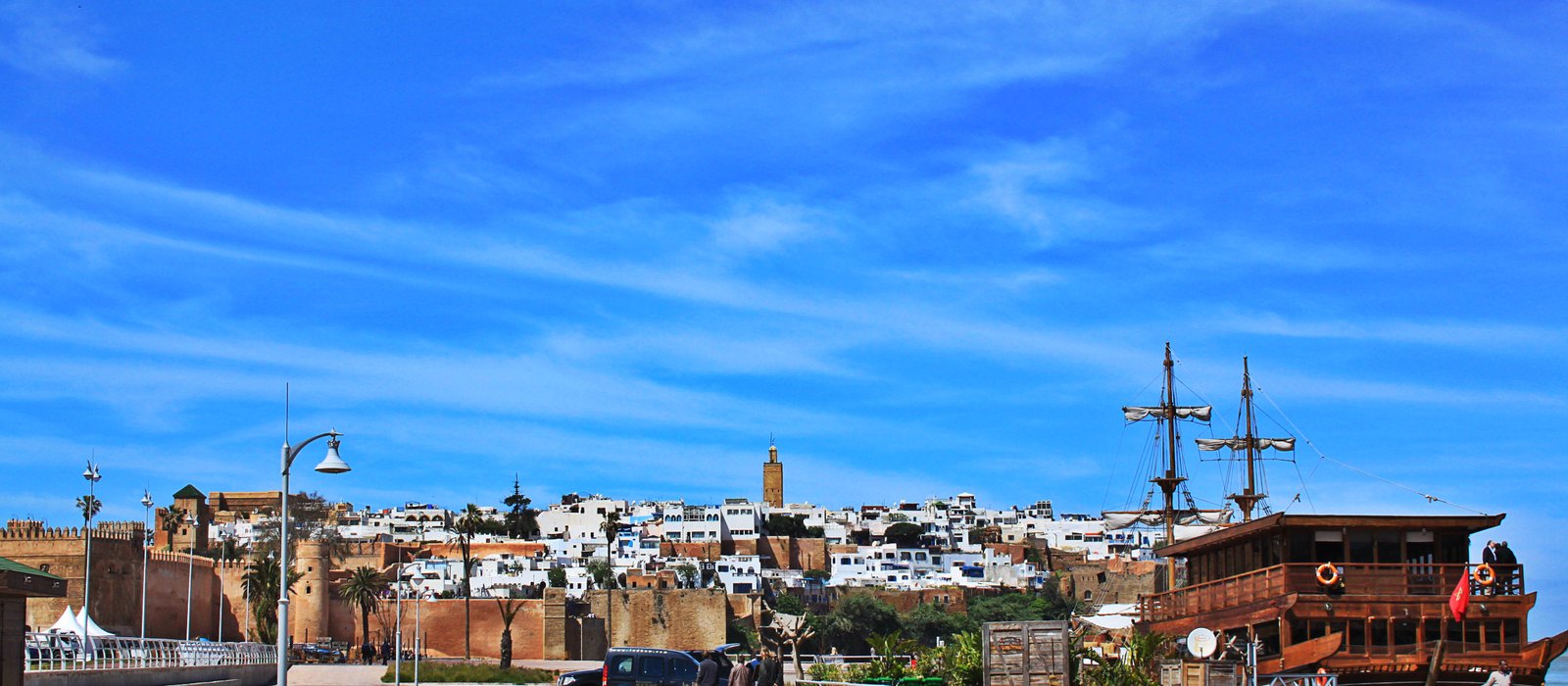
View this stayIllustrative photo of Rabat — property galleries are on each booking page.
Rabat is Morocco's working capital rather than a tourist stage set — a UNESCO World Heritage city where Andalusian-walled medina streets, a 12th-century royal kasbah, and wide French-built boulevards sit within a few minutes' walk of each other, calmer and far less touristed than Marrakech or Fez.
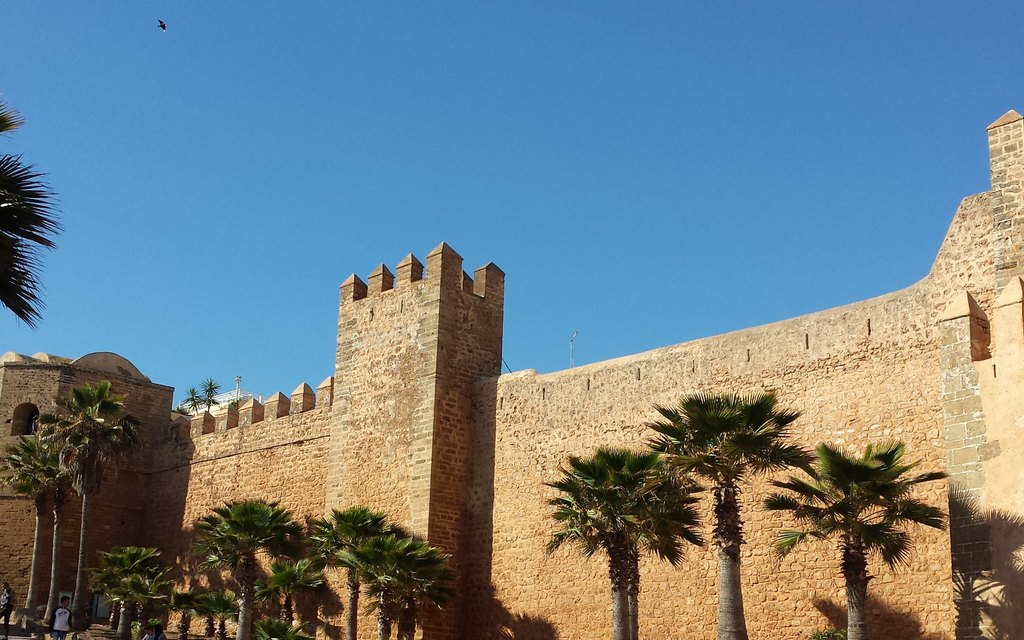
Rabat's history begins with a ribat, a fortified religious outpost built above the Bou Regreg's mouth by Andalusian settlers around the 10th century. The Almohad caliph Abd al-Mu'min raised a proper kasbah on the site in 1150, and his grandson Yaqub al-Mansur set out around 1184 to build an imperial capital, Ribat al-Fath, ringed by ramparts and centred on a mosque intended to be the largest in the Muslim west; when al-Mansur died in 1199 the project stopped, leaving the 44-metre Hassan Tower standing over a forest of unfinished columns. The city then languished for centuries until 1609, when thousands of Moriscos expelled from Spain resettled the kasbah and, in 1627, joined Salé across the river to found the corsair Republic of Bou Regreg. Rabat only became Morocco's political centre in 1912, when the French Protectorate's resident-general Hubert Lyautey made it the seat of government and commissioned planner Henri Prost to build an entirely new administrative city alongside the old medina — a decision that, together with the 12th-century core, earned Rabat UNESCO World Heritage status in 2012.
That layered history makes Rabat a different kind of base than Marrakech or Fez. It is a working capital first — home to parliament, the royal palace, and most foreign embassies — so its old medina, though genuinely 12th-to-17th-century and UNESCO-listed, moves at a resident's pace rather than a tourist market's, and the whitewashed, blue-shuttered lanes of the Kasbah des Oudayas above the Atlantic are as much a residential quarter as a sight. Staying here means riads tucked into a quieter medina, easy walking to Hassan Tower and the wide, palm-lined Avenue Mohammed V, and a cooler Atlantic climate than the interior cities. It is also a genuinely convenient base: Salé, with its own Almohad-era Great Mosque, sits a short tram ride across the Bou Regreg, and the Roman-and-Marinid ruins of Chellah, now nesting ground for dozens of white storks, are minutes from the centre.

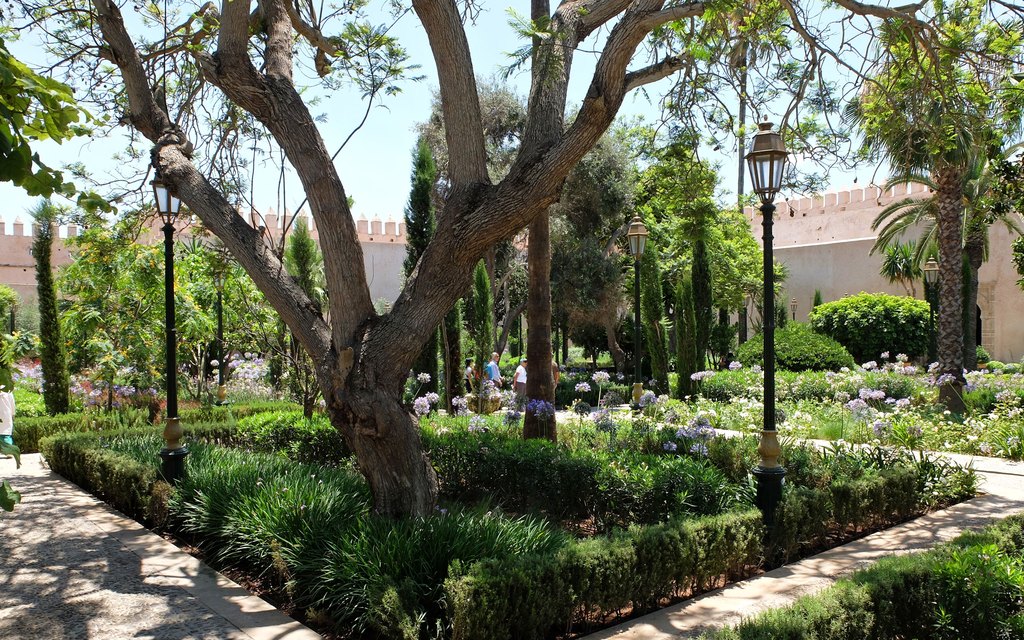
A 12th-century Almohad fortress of whitewashed, blue-washed lanes above the Atlantic, built by Abd al-Mu'min in 1150 and still centred on Rabat's oldest mosque and the 18th-century Andalusian Gardens.
.jpg)
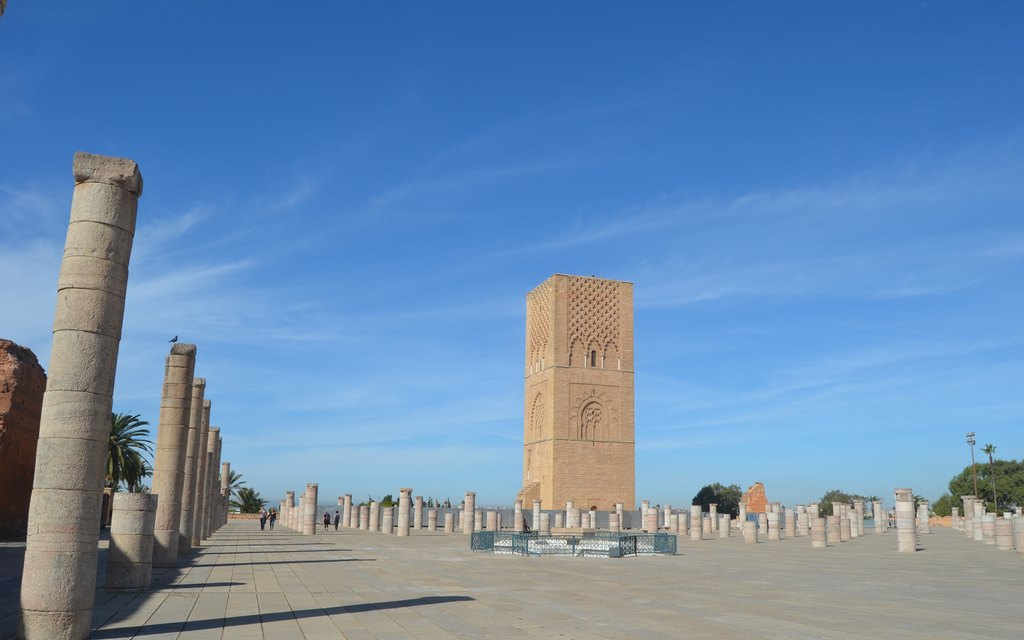
The 44-metre unfinished minaret of Yaqub al-Mansur's 1184 imperial mosque stands over its abandoned forest of columns, facing the 1971 marble-and-tile Mausoleum of Mohammed V across the same esplanade.

A walled Roman colony (Sala Colonia, founded around 40 CE) turned 14th-century Marinid royal necropolis, now roamed by peacocks and topped with roughly 75 nests of breeding white storks.

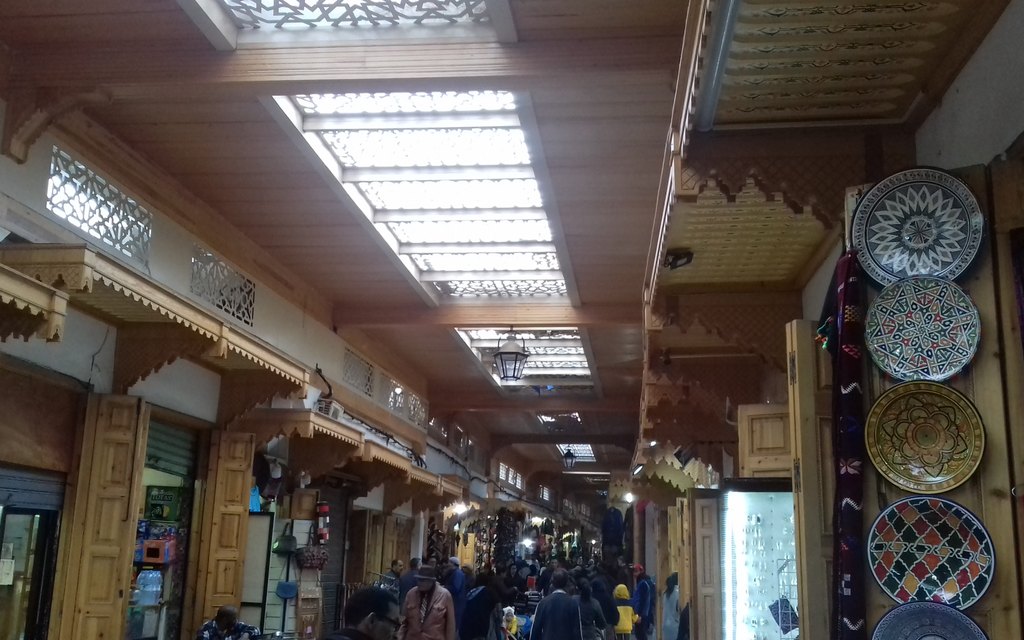
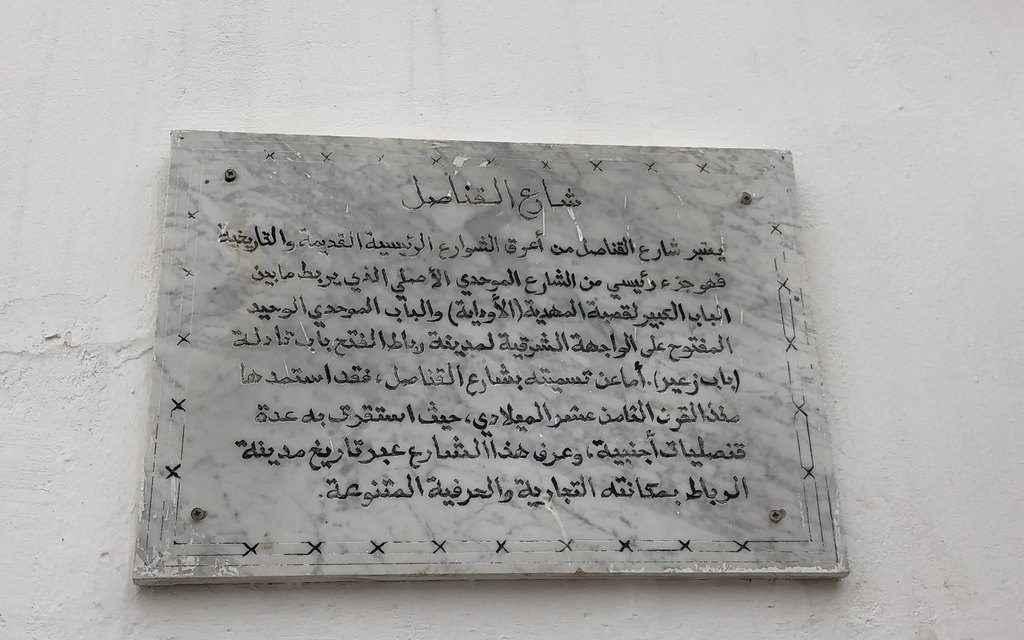
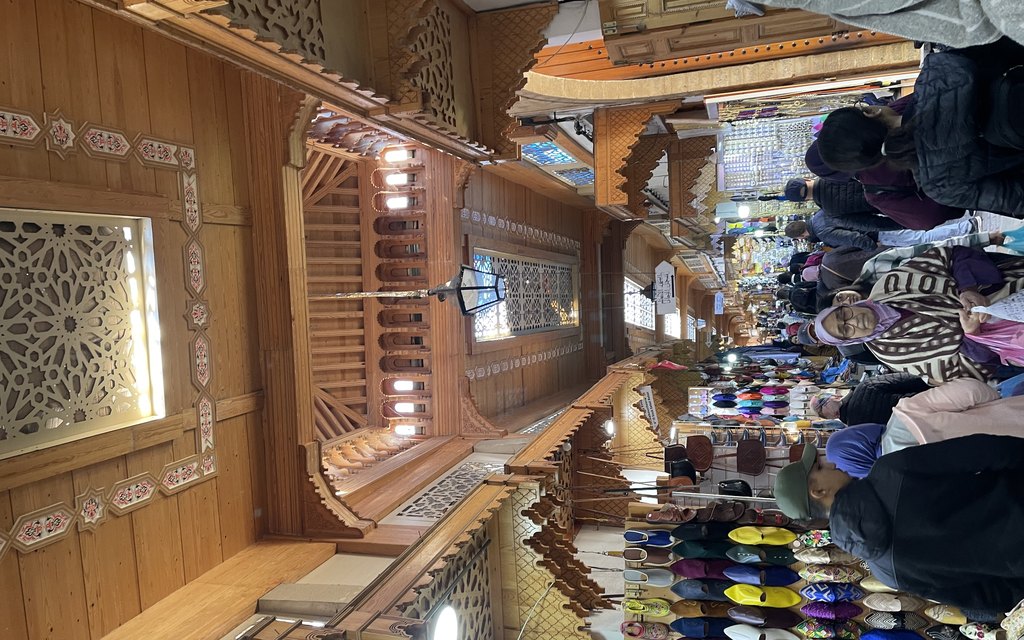
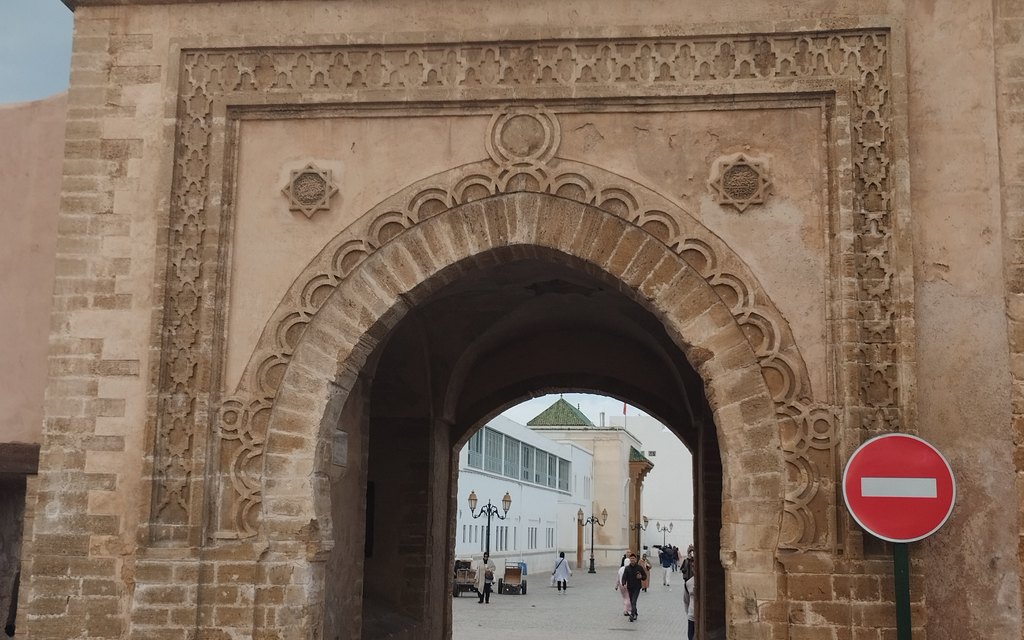
Enclosed by the 17th-century Andalusian Wall built by Morisco refugees from Spain, the UNESCO-listed old town's Rue des Consuls remains its historic trading street for carpets, leather and jewellery.

Cross the river that once sheltered the 1627 corsair Republic of Bou Regreg to reach Salé's own walled medina and its Almohad Great Mosque, built between 1163 and 1184.

Rabat's ville nouvelle, laid out from 1912 by French planner Henri Prost under resident-general Lyautey, lines this boulevard with neo-Moorish landmarks like the Bank Al-Maghrib building and the Central Post Office.
A 7-room family-run riad near Bab El Had with Rabat's largest Booking.com review count and a 9.0/10 score.
View this stayFormer Caïd Bargach residence turned 8-suite boutique riad, redesigned after an 11-year restoration.
View this stayA 7-room riad in Rabat's old jewellers' quarter, prized by guests for its beds and breakfast despite thin soundproofing.
View this stayOne of the few Rabat riads with its own rooftop pool, spread across 9 rooms above the medina — though it's genuinely hard to find.
View this stayA 10-room Rue des Consuls riad whose restaurant, rated 4.5/5 on TripAdvisor, outshines the guesthouse itself.
View this stayThe only riad in central Rabat's medina with a lift — a genuine accessibility rarity in an old town of stepped alleys.
View this stayA rooftop-garden riad near the Kasbah des Oudayas so unmarked in its alley that even taxi drivers struggle to find it.
View this stayA quiet 3-room medina guesthouse near Rabat's Kasbah des Oudayas with a plunge pool, but no vehicle access to the door.
View this stayAn 11-room Andalusian-style riad in Rabat's medina with a pool and hammam, though one guest reports a cancelled paid booking.
View this stayFive more regions, each with its own character and its own hand-picked stays.
Riads in the medina, between Jemaa el-Fna and the souks.
Browse stays →The world's largest car-free medina, and where to stay in it.
Browse stays →A walled Atlantic port town, windswept and unhurried.
Browse stays →Morocco's blue city, tucked into the Rif Mountains.
Browse stays →Kasbahs and mountain lodges around Imlil, Asni and Ourika.
Browse stays →Desert camps and kasbahs on the road to the dunes.
Browse stays →Moulay Ismail's monumental gates, and the gateway to Volubilis.
Browse stays →Port city energy, an Andalusian medina, and a whitewashed art town.
Browse stays →