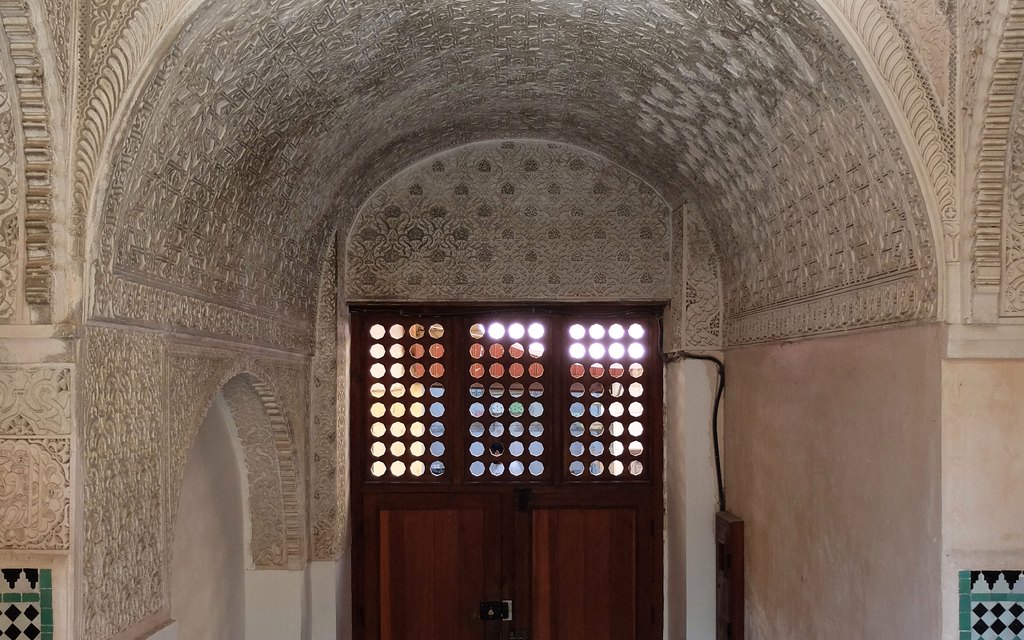
Riad Fès – Relais & Châteaux
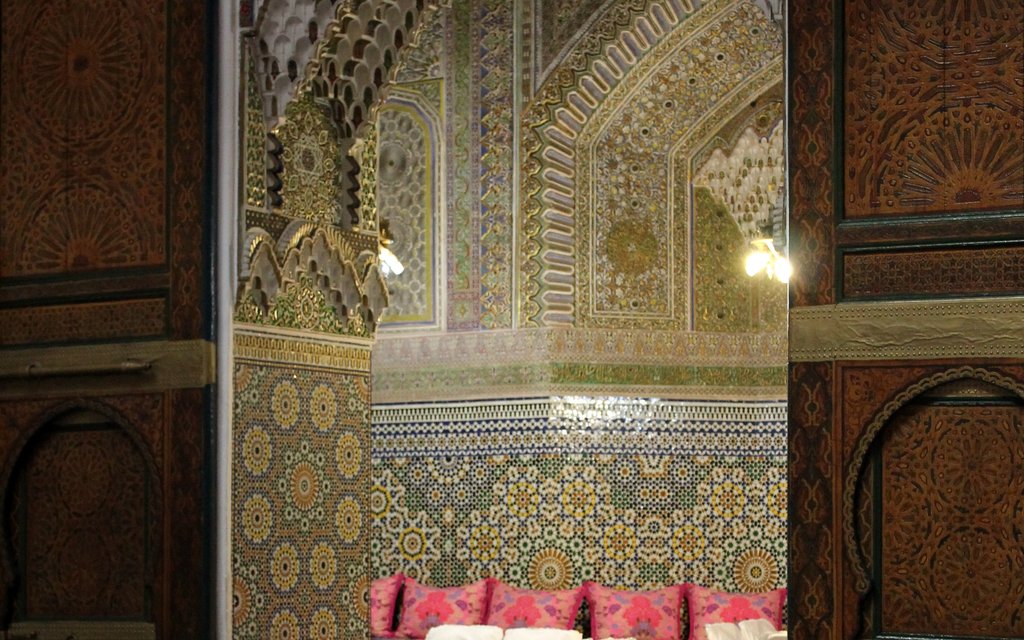
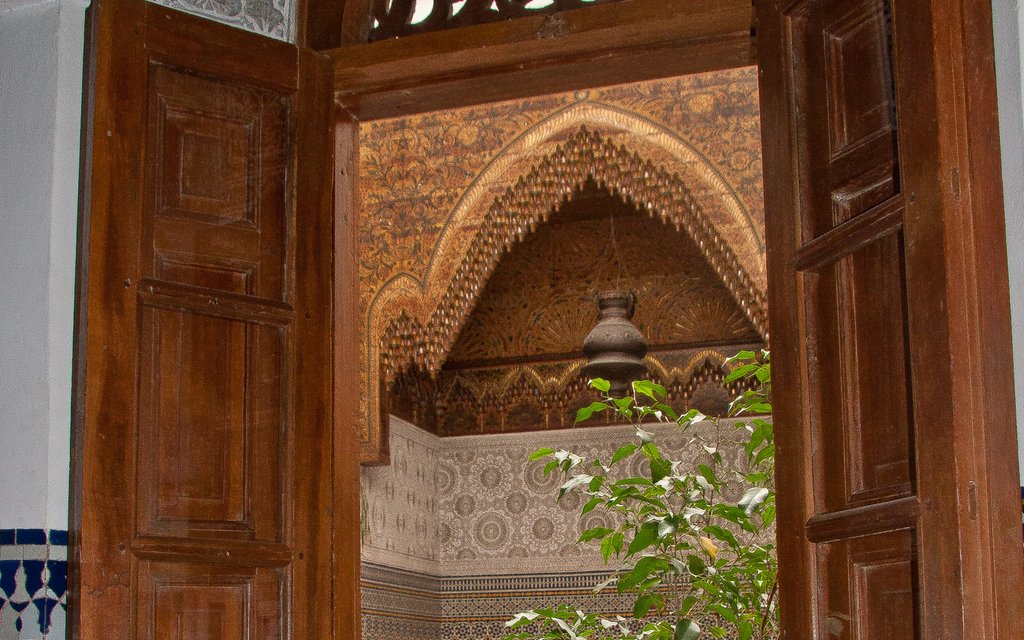
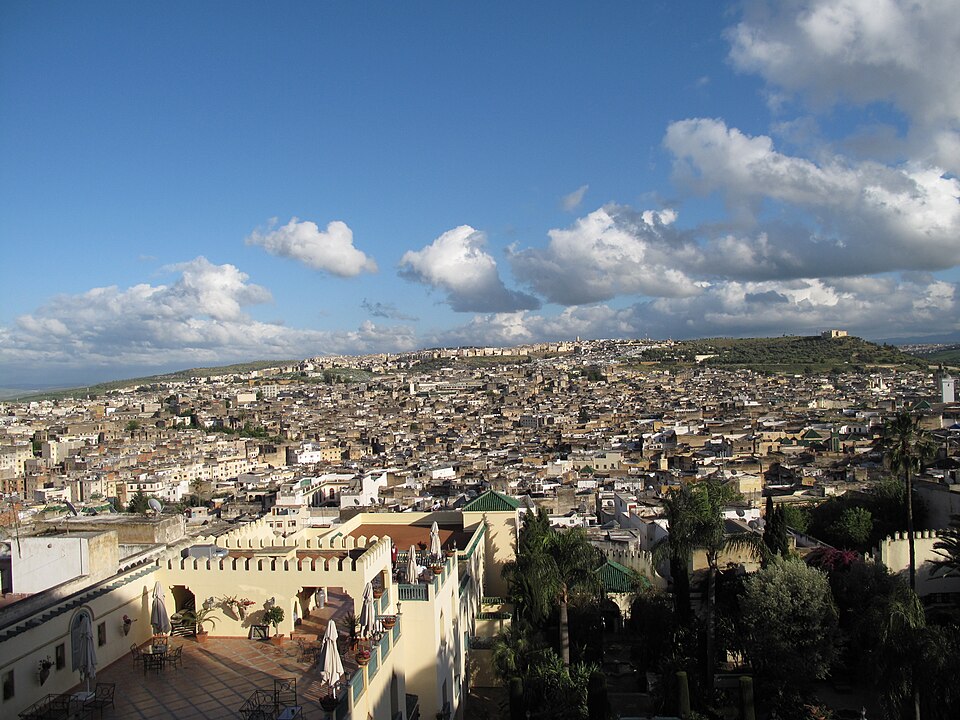
Grand Andalusian-Moorish palace in the medina with a wine bar overlooking the whole ancient city.
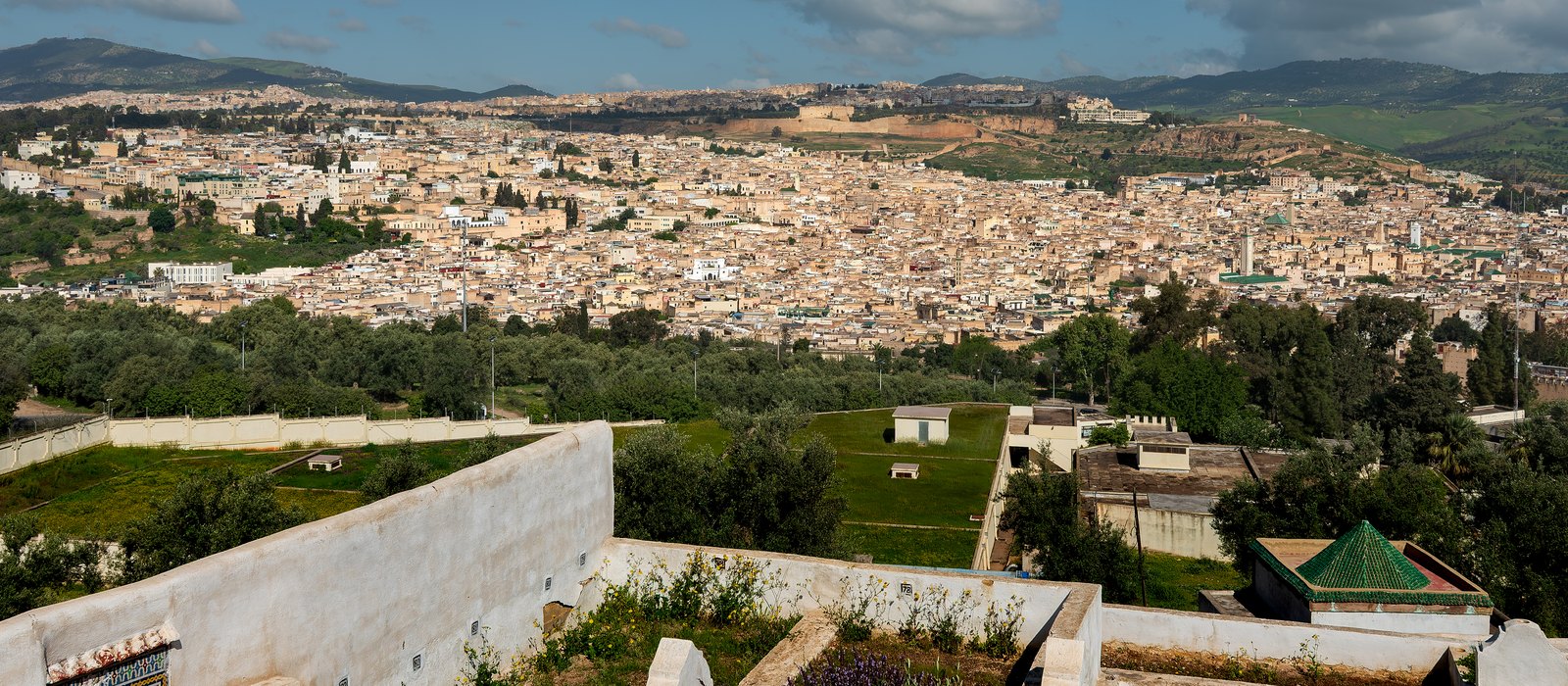
View this stayIllustrative photo of Fes — property galleries are on each booking page.
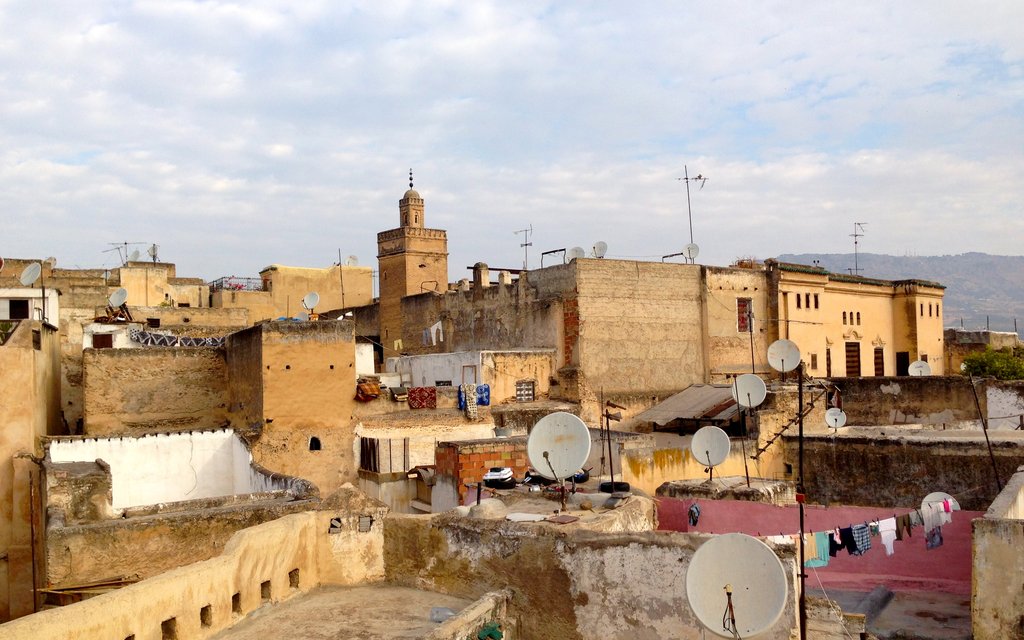
Fes el-Bali is the oldest of Morocco's imperial medinas and, by most counts, the largest car-free urban area on Earth — here's what that's actually like to stay in, and every riad we'd book ourselves.
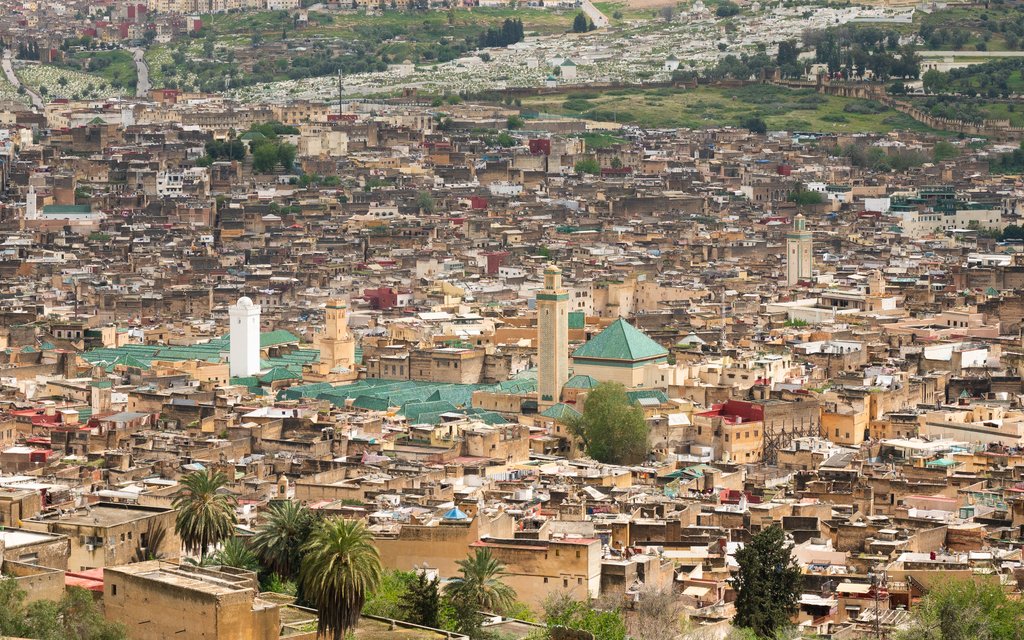
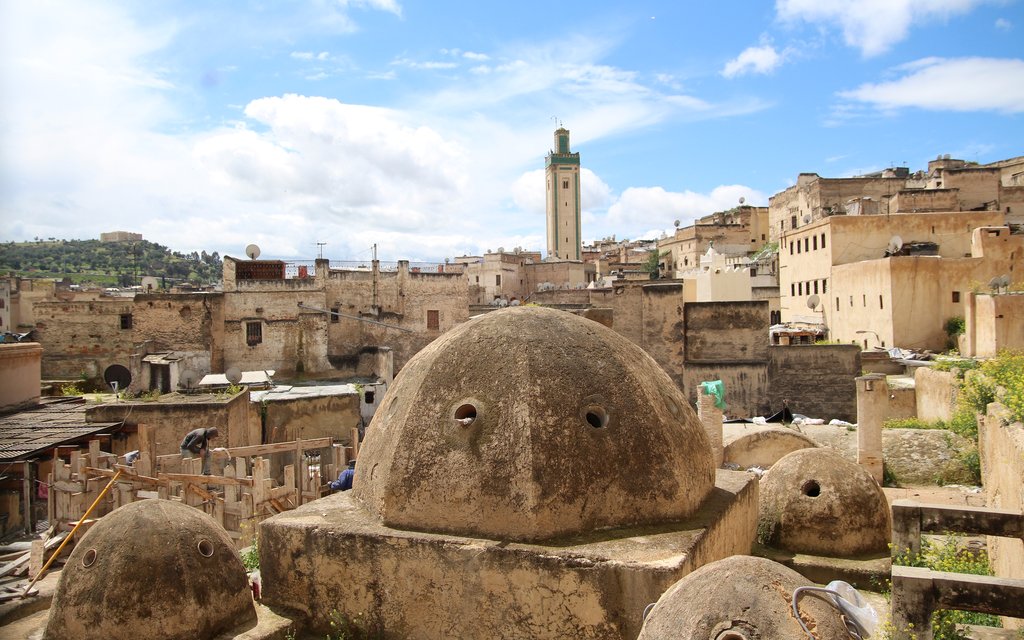
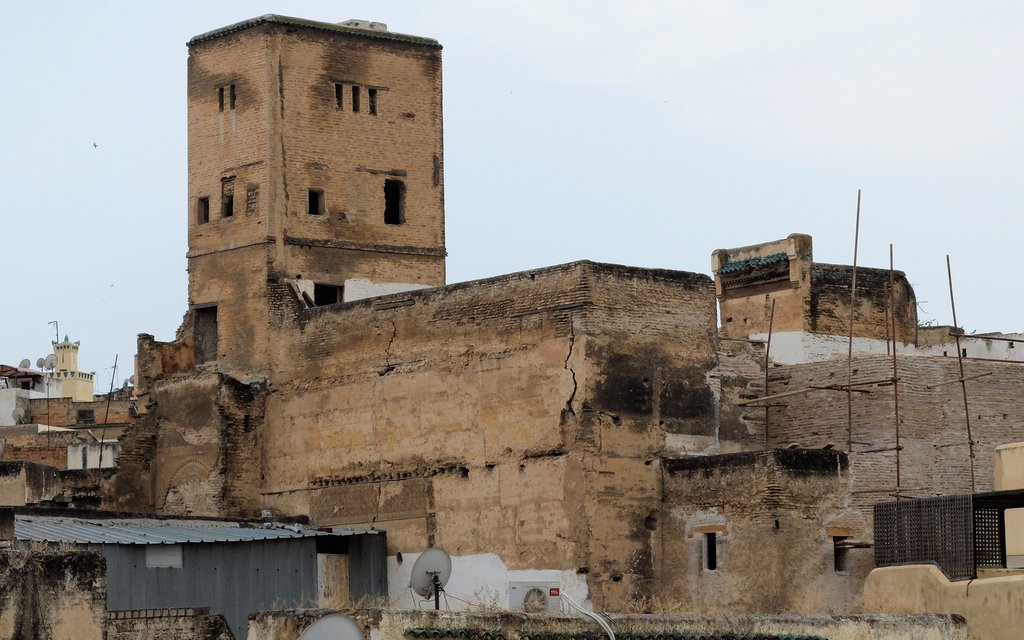
Fes el-Bali is the old walled city of Fes, founded in 789 CE by Idris I and substantially expanded by his son Idris II in 808 — making it, by most measures, the oldest of Morocco's imperial medinas. UNESCO inscribed it as a World Heritage Site in 1981, and it's widely cited as the largest car-free urban area in the world: an estimated 9,000-plus narrow alleyways across roughly 300 hectares, navigable mainly on foot, with donkeys and handcarts still doing the heavy lifting where no vehicle can pass. Only one paved road penetrates the medina, following the Oued Fes river down to Place R'cif near the centre.
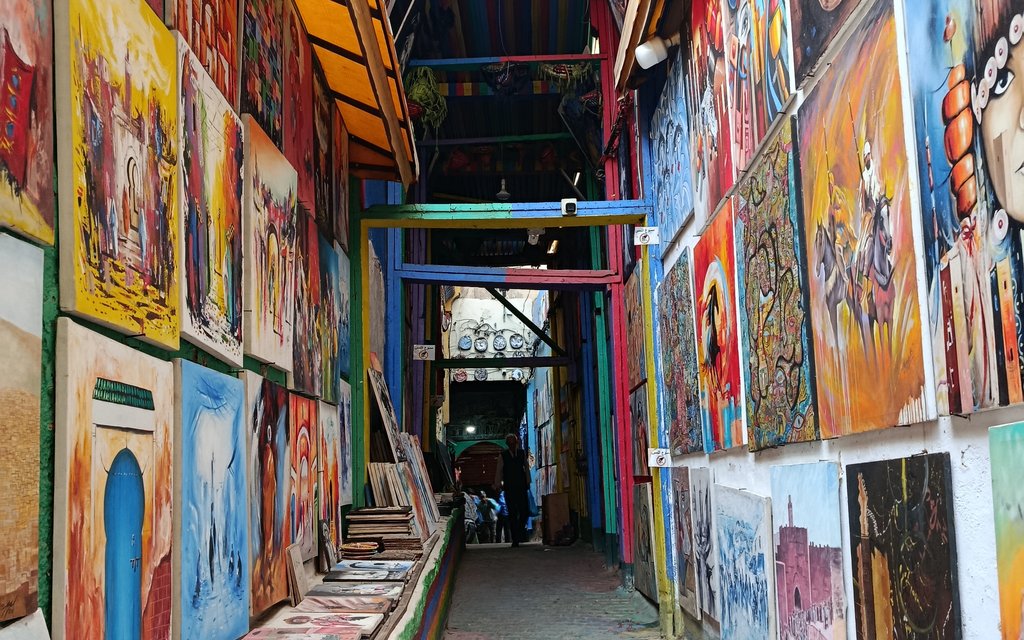
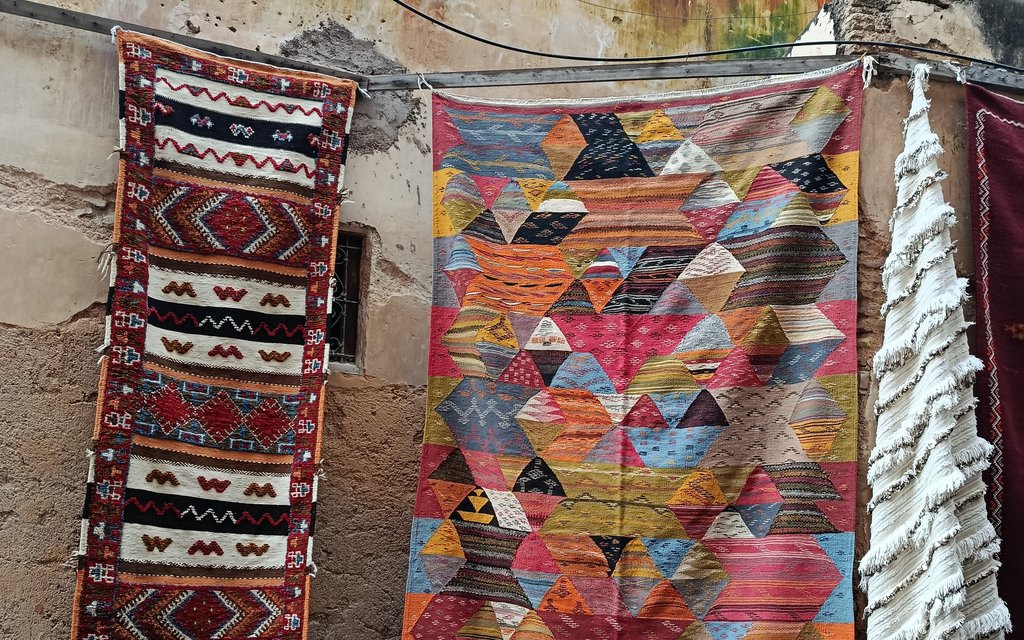
Where Marrakech's medina is a single dense ring around one square, Fes el-Bali is a sprawling river valley of eighteen historic quarters split between the Qarawiyyin side and the Andalusian side, connected by a spine of covered souk streets running from the gates to the Qarawiyyin Mosque. It feels older and more residential — fewer souvenir stalls, more sounds of artisans actually working: hammering copper, carving cedar, dyeing leather. Getting lost here is close to unavoidable and, for most visitors, part of the experience.
_in_the_city_of_Fes,_Morocco_(Image_1_of_9).jpg)
founded in 859 CE, recognised by UNESCO and Guinness World Records as the oldest continuously operating educational institution in the world — closed to non-Muslims inside, but its monumental gates can be viewed from the street.
.jpg)
built 1350-55, one of the only religious sites in Fes open to non-Muslim visitors and the only Moroccan madrasa that also functioned as a full congregational mosque.
.jpg)
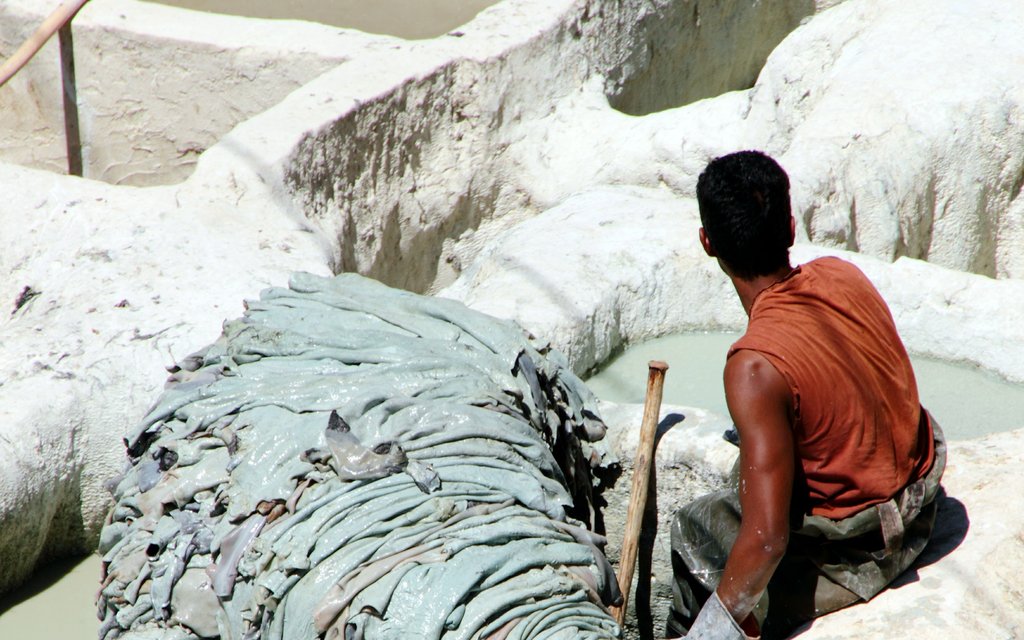
carved into the medina in the 11th century and still in daily use — view the dye and lime pits from the rooftop terraces of surrounding leather shops, who hand out mint sprigs to offset the smell.
.jpg)
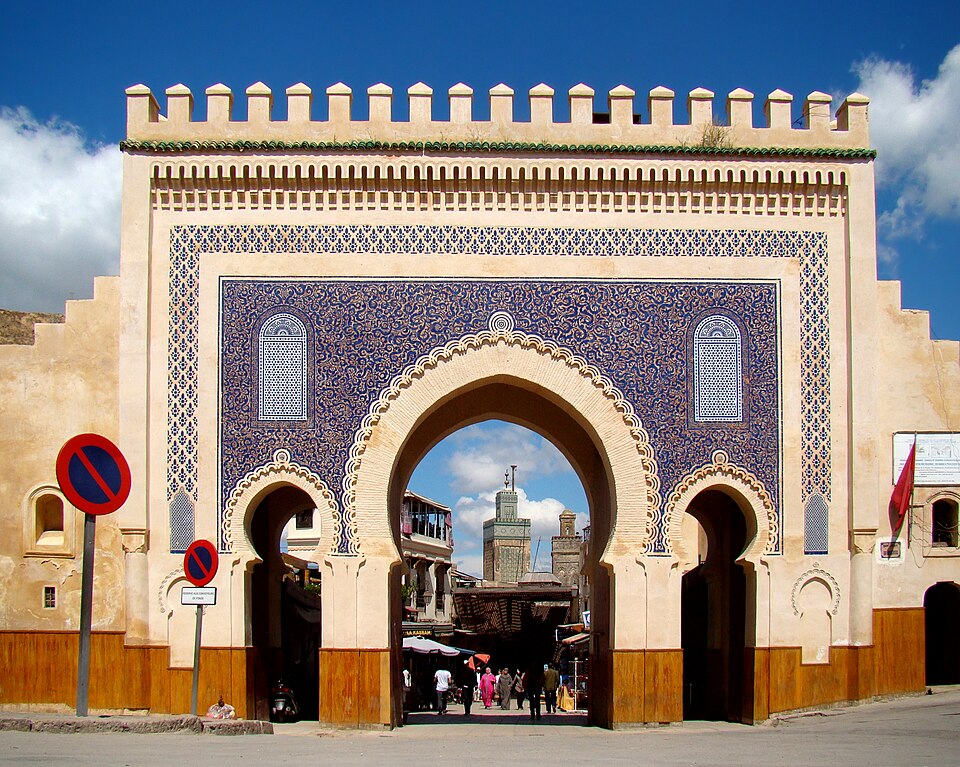
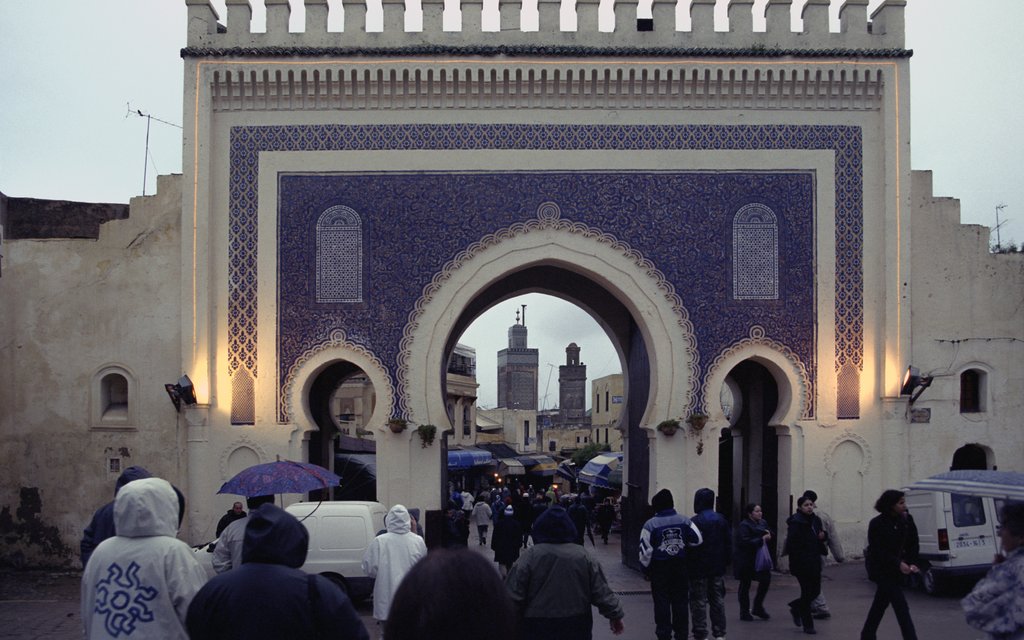
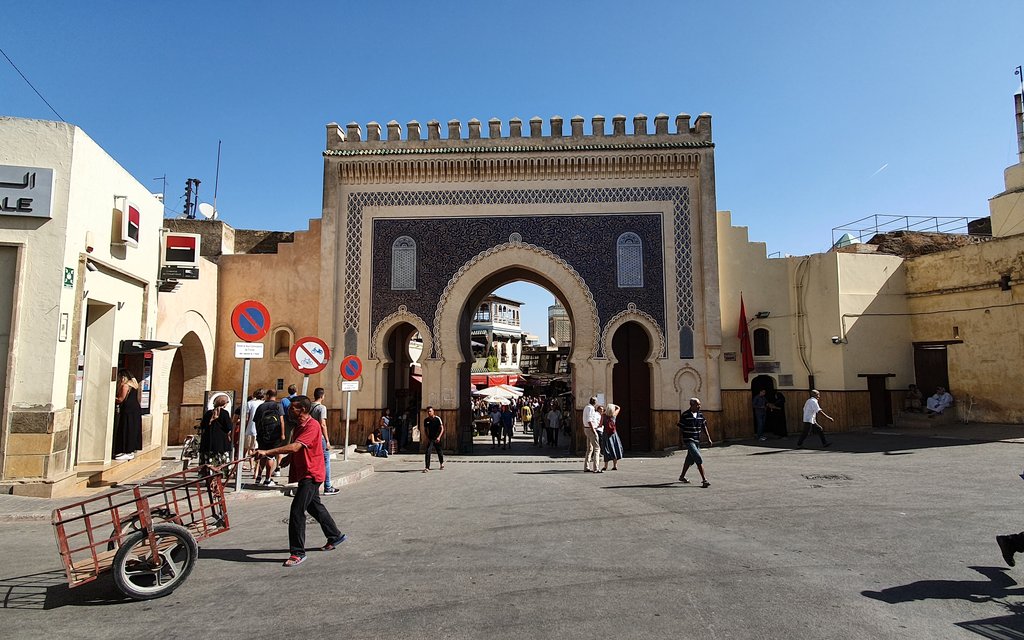
the ornate blue-and-green tiled gate built in 1913 marking the main entrance to Fes el-Bali — blue tiles face the new city, green (the traditional colour of Islam) face the medina.

housed in a restored 18th-century fondouk once used to lodge travelling merchants and their goods; the carved-wood building is as much the exhibit as what's inside it.

the medina's principal souk artery running from Bab Boujloud down toward the Qarawiyyin, lined with spice stalls and metalworkers — walking its length is the fastest way to feel how the medina fits together.
Grand Andalusian-Moorish palace in the medina with a wine bar overlooking the whole ancient city.
View this staySeven suites in a 17th-century merchant house, restored over a decade — serene, sculptural, quietly spectacular.
View this stayA 17th-century palace with an orange-tree courtyard and a proper stone hammam. Great cooking classes too.
View this stayArchitect-restored riad beside the coppersmiths' square — soaring columns, communal dinners, honest prices.
View this stayArt-deco-meets-Fassi palace with lush gardens at the medina's edge — rooftop cocktails over the tanneries.
View this stayA 19th-century palace restored over four years — the rare Fes medina address with its own pool, spa, and rooftop restaurant over the old city.
View this stayTwo restored 18th-century Fassi houses plus a purpose-built spa wing at the medina's edge — easier for luggage than deep-medina riads.
View this stayA six-room riad with a genuine rarity for the Fes medina — an elevator, plus curbside parking at the door.
View this stayA seven-suite riad built for groups — private pool, private parking, and room for up to eighteen.
View this stayTwo connected houses once owned by a wealthy Fassi family, with a full hammam spa and an on-site bar.
View this stayAn Arab-Andalusian riad with its own library of Moroccan history and culture, and a restaurant good enough to rank on its own merits.
View this stayA quiet, car-accessible dar in the Ziat quarter, where owner Mohammed greets every guest with mint tea himself.
View this stayA rare dual indoor-and-outdoor pool set-up, plus a full hammam spa, at a genuinely modest price.
View this staySeven Andalusian-styled suites minutes from the Rcif food market, with multilingual staff and famously comfortable beds.
View this stayEleven spice-named rooms around an indoor pool and hammam, with a rooftop café looking out past the medina walls.
View this stayA centuries-old family-managed palace with its own 'Hanging Gardens' terrace, steps from Bab Rcif.
View this stayA 1910 house refreshed in 2023, with an elevator-accessible rooftop pool and 360° views out past the medina walls.
View this stayA six-room family-run guesthouse near Fes's Blue Gate, rated 9.5/10 on Booking.com with breakfast praised as a highlight.
View this stayFive more regions, each with its own character and its own hand-picked stays.
Riads in the medina, between Jemaa el-Fna and the souks.
Browse stays →A walled Atlantic port town, windswept and unhurried.
Browse stays →Morocco's blue city, tucked into the Rif Mountains.
Browse stays →Kasbahs and mountain lodges around Imlil, Asni and Ourika.
Browse stays →Desert camps and kasbahs on the road to the dunes.
Browse stays →Morocco's working capital — imperial history without the crowds.
Browse stays →Moulay Ismail's monumental gates, and the gateway to Volubilis.
Browse stays →Port city energy, an Andalusian medina, and a whitewashed art town.
Browse stays →