Dar Sultan
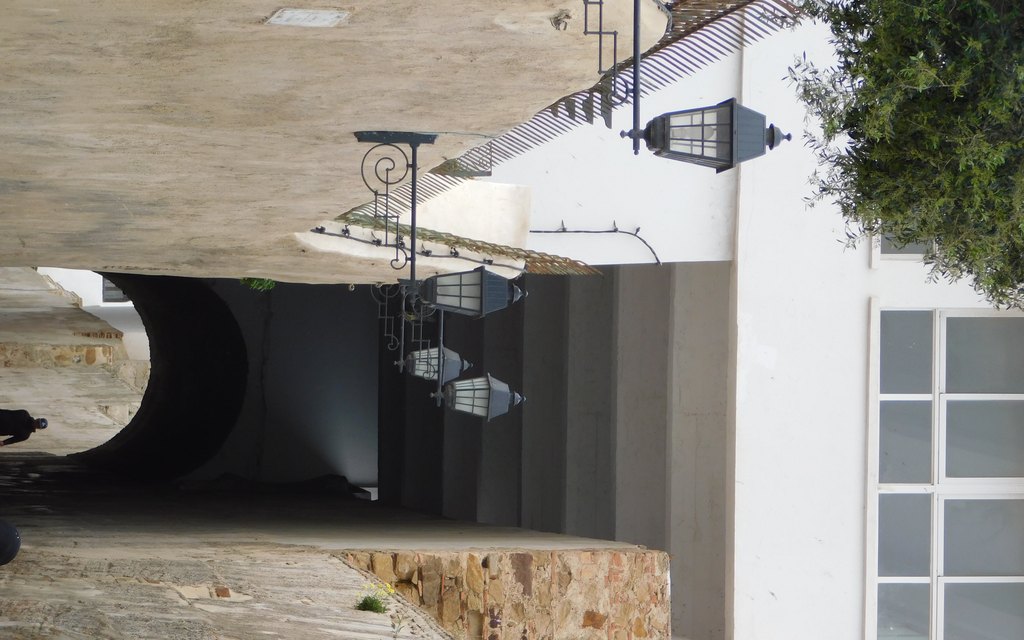
A 300-year-old Kasbah house restored by Fez and Marrakesh craftsmen, its rooftop terrace looking over the Strait of Gibraltar.
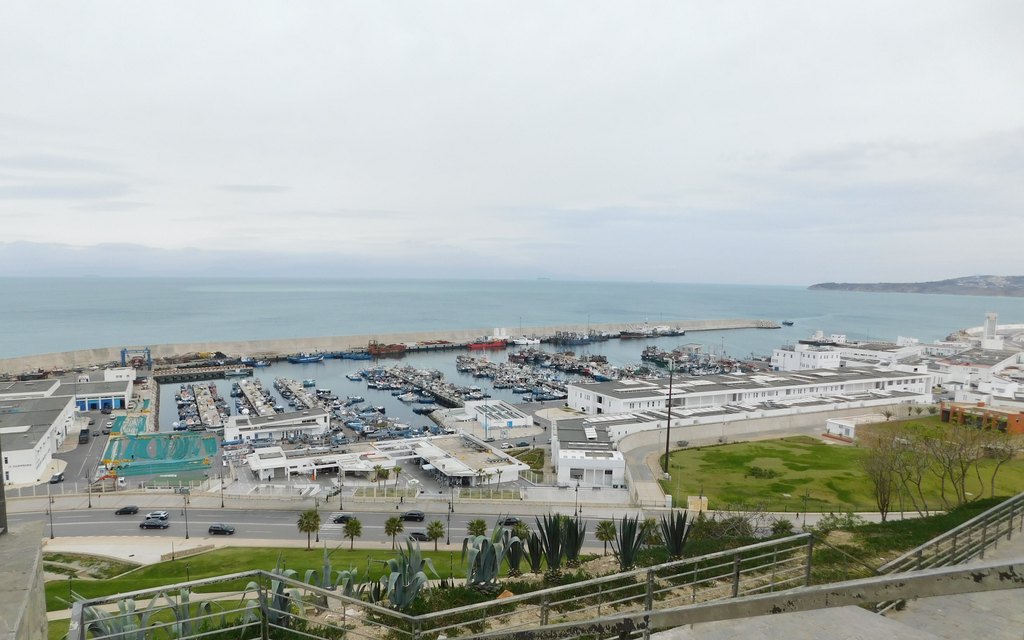
View this stayIllustrative photo of Tangier & North Coast — property galleries are on each booking page.
Tangier spent over three decades (1923-1956) as an international zone jointly administered by foreign powers, a status that shaped its port-city, cosmopolitan character far more than the imperial cities inland — a walled Kasbah still looks out over the Strait of Gibraltar from the medina's highest point. It's also the natural base for two smaller neighbours on this stretch of coast: Tetouan, whose Andalusian-built medina is a UNESCO World Heritage Site, and Asilah, a whitewashed Atlantic town known for its Portuguese ramparts and annual mural festival.
Tangier's history stretches back to a Phoenician trading post called Tingis, founded by around the 8th century BCE on the Atlantic side of the Strait of Gibraltar; under Rome it became a free city and then the capital of the province of Mauretania Tingitana. Its position at Africa's gateway to Europe made it a prize for successive powers — Vandals, Byzantines, Arab dynasties, and, in 1661, England, which acquired it as part of Catherine of Braganza's dowry when she married Charles II, holding it until the garrison was evacuated in 1684 under sustained Moroccan pressure. The Kasbah, the walled quarter capping the medina, still holds the old governor's palace, Dar el-Makhzen, rebuilt after the English withdrawal and expanded through the 18th century; it's now the Kasbah Museum, standing over the same drop to the Strait that made this hilltop worth fortifying in the first place. That strategic value resurfaced in the 20th century, when Tangier became an International Zone in 1923, jointly run by France, Spain, and Britain as a neutral, tax-free port — a status that drew spies, exiled royalty, and a wave of expatriate writers and artists until Morocco reabsorbed the city at independence in 1956.
That layered, outward-facing history makes Tangier a different kind of base than Morocco's inland imperial cities — a working port with real medina life rather than a stage set, and the natural hub for two smaller towns worth building a trip around. Half an hour southeast, Tetouan's medina is widely considered Morocco's best-preserved example of Andalusian-influenced town planning: rebuilt from 1492 by Ali al-Mandri and thousands of Muslim and Jewish refugees fleeing the fall of Granada, it was inscribed as a UNESCO World Heritage Site in 1997 and remains ringed by roughly 5km of walls pierced by seven historic gates. An hour down the Atlantic coast, Asilah is smaller and quieter still — a whitewashed town behind 15th-century Portuguese ramparts, transformed since 1978 by the Moussem Culturel International, an annual arts festival whose visiting painters turn the medina's walls into a repainted open-air gallery every summer. Staying in this region means a genuine port city with international-era architecture and diplomatic history, plus two distinct day trips within an hour's reach, and noticeably fewer crowds than Marrakech or Fez.

The walled quarter capping the medina, home to the old governor's palace rebuilt after England's 1684 withdrawal (an interior inscription dates a later phase to 1737-38), now the Kasbah Museum, with the medina's best rooftop views over the Strait of Gibraltar.

Africa's northwesternmost point, where the Atlantic meets the Mediterranean at the mouth of the Strait, 14km west of the city; below the headland, the part-natural, part-quarried Caves of Hercules have a sea-facing opening said by legend to have been carved by Hercules himself.

Gifted to the US government by Sultan Moulay Suliman in 1821, this was the first public property the United States ever owned abroad and served as its consulate for 140 years, the longest continuous use of any American diplomatic building overseas.

The circular square dividing Tangier's medina from its newer town, renamed for Sultan Mohammed V's 1947 speech here calling for independence, today centred on a marble fountain and gardens beside the arched entrance to the Mendoubia Gardens.

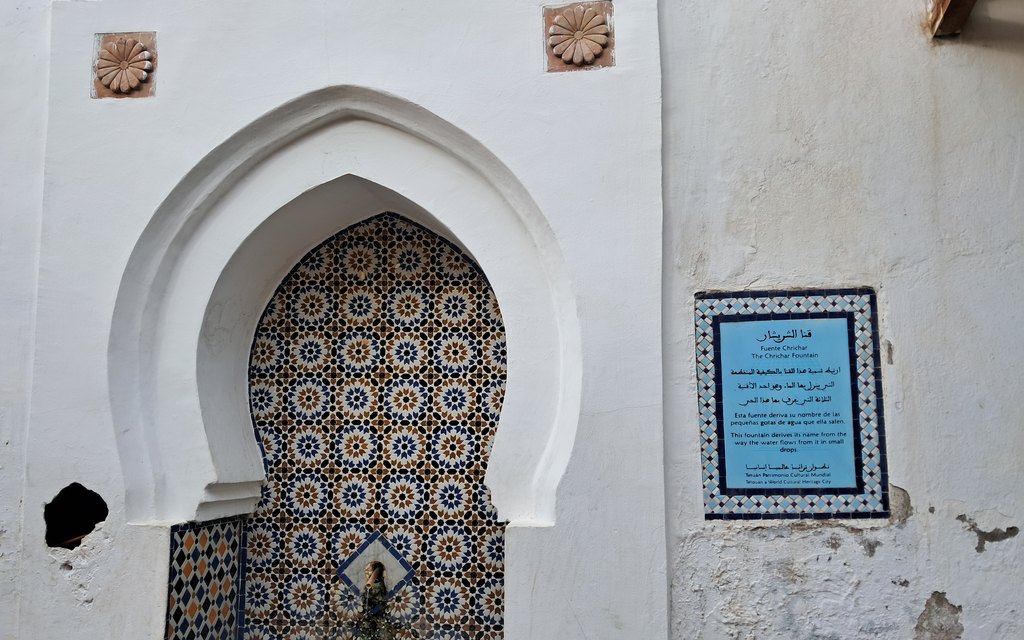
A UNESCO World Heritage Site since 1997 and widely regarded as Morocco's best-preserved Andalusian-style medina, rebuilt from 1492 by refugees fleeing the fall of Granada, its roughly 5km of walls entered through seven historic gates.

The town's 15th-century Portuguese-built sea walls, among Morocco's best-preserved Portuguese fortifications, become an open-air gallery each summer during the Moussem Culturel International, founded in 1978.
A 300-year-old Kasbah house restored by Fez and Marrakesh craftsmen, its rooftop terrace looking over the Strait of Gibraltar.
View this stayA tastefully restored Kasbah riad whose on-site hammam and massage draw comparisons to Michelin-starred service.
View this stayA five-room Kasbah guesthouse near the Kasbah Museum, where host Mohammed personally arranges guides, taxis, and breakfast crêpes.
View this stayA 17th-century Andalusian house in Tetouan's quiet UNESCO medina, its courtyard fountain and tilework tended by host Lotfi.
View this stayA restored 19th-century Spanish consulate in Tetouan's UNESCO medina, with its own hammam and a Spanish-Moroccan fusion restaurant.
View this stayA modest, well-located Asilah guesthouse where staff's local know-how outshines the dated self-catering kitchens.
View this stayFive more regions, each with its own character and its own hand-picked stays.
Riads in the medina, between Jemaa el-Fna and the souks.
Browse stays →The world's largest car-free medina, and where to stay in it.
Browse stays →A walled Atlantic port town, windswept and unhurried.
Browse stays →Morocco's blue city, tucked into the Rif Mountains.
Browse stays →Kasbahs and mountain lodges around Imlil, Asni and Ourika.
Browse stays →Desert camps and kasbahs on the road to the dunes.
Browse stays →Morocco's working capital — imperial history without the crowds.
Browse stays →Moulay Ismail's monumental gates, and the gateway to Volubilis.
Browse stays →